

ByAnish
NYT Strands #584 Answer – October 8, 2025: SOUNDCHECK
NYT Strands #584 Answers – October 8, 2025
If you’re looking for the NYT Strands 584 October 8 2025 answers, you’ve come to the right place. Today’s puzzle, themed “Now, hear this!”, is perfect for music fans and audio enthusiasts. This guide includes all answers, spangram tips, and audio engineering context to help you understand each term and enjoy the puzzle fully.
Quick Answer: Today’s Strands Spangram is SOUNDCHECK
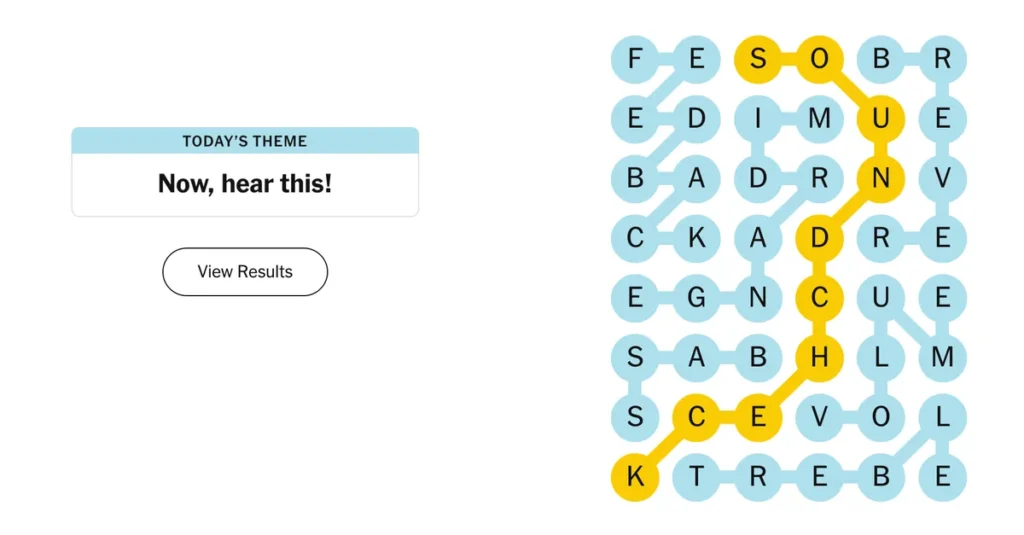
Spoiler Alert: The SOUNDCHECK spangram is the key to solving today’s Strands puzzle.
- Theme: Audio equipment and live sound production.
- Difficulty Notes: Some words are tricky to unscramble. Earplugs may be handy!
- Strategy: Look for high-frequency and low-frequency terms first.
All NYT Strands 584 Answers (Audio Engineering Theme)
Here are all the words for Strands 584:
- BASS – Low-frequency audio range (20–250 Hz) forming the foundation of music.
- REVERB – Audio effect simulating reflections in enclosed spaces, adding depth.
- TREBLE – High-frequency audio range (4–20 kHz), crucial for clarity.
- VOLUME – Loudness or amplitude of an audio signal.
- FEEDBACK – Unwanted loop when a microphone picks up its own amplified signal.
- MIDRANGE – Middle frequencies (250 Hz–4 kHz), vital for vocals and instruments.
Spangram: SOUNDCHECK uses all letters of the puzzle.
Today’s Theme: ‘Now, hear this!’ – Audio Technology Explained
This puzzle teaches the basics of audio engineering:
- Pre-performance testing, or soundcheck, ensures optimal sound levels.
- Understanding frequency ranges (bass, midrange, treble) improves music mixing.
- Awareness of feedback and volume control is essential for safe and clear audio.
Step-by-Step Solution Guide for Strands 584
- Identify spangram letters: Start with S, O, U, N, D, C, H, E, K.
- Look for key audio terms: BASS, TREBLE, REVERB are high-frequency and low-frequency markers.
- Check combinations: Midrange and volume often appear in combination with other letters.
- Avoid duplicates: Each word must be unique; feedback can trip up new solvers.
How to Find the SOUNDCHECK Spangram
- Focus on longer words first, especially nine-letter words.
- Group letters by common audio terms: SOUND, CHECK, BASS, TREBLE.
- Use pattern recognition to connect letters efficiently.
Pro Tip: Using a spangram path visualization can help track letters used.
- 🏈 NYT Connections Sports Edition #380 (October 8, 2025)
- 🔗 NYT Connections Puzzle #850 Answers (October 8, 2025)
- 🟩 Wordle #1572 Answer (October 8, 2025)
- 🎯 Coin Master Rewards
Audio Engineering Fundamentals: From Bass to Treble
Understanding audio helps you see why these words were chosen:
- BASS: Foundation of rhythm; feels in the chest.
- MIDRANGE: Key for speech intelligibility and melodic balance.
- TREBLE: Adds sparkle; critical for percussive clarity.
- REVERB: Adds spatial effect; simulates room acoustics.
- VOLUME: Controls overall loudness; avoid clipping.
- FEEDBACK: Harmful loops to monitor; common in live concerts.
Live Sound and Concert Production: The Art of Soundcheck
A soundcheck is crucial for professional shows:
- Engineers test microphones, speakers, and instruments.
- Adjust gain, EQ, and effects like reverb for each channel.
- Detect potential feedback loops before audience arrival.
- Ensures balanced audio levels across bass, midrange, and treble.
Yesterday’s Strands Answer and Recent Solutions
- Strands 583: SPINOFF
- Oct. 6, 582: CHORDS
- Oct. 5, 581: ENCORE
- Oct. 4, 580: MIXER
- Oct. 3, 579: FADER
Tracking recent puzzles helps anticipate patterns and themes, especially in music-related Strands.
FAQ — NYT Strands 584 (October 8, 2025)
Q1: What is today’s NYT Strands 584 answer?
A: The spangram is SOUNDCHECK. Other words include BASS, REVERB, TREBLE, VOLUME, FEEDBACK, MIDRANGE.
Q2: What is the theme for Strands 584?
A: “Now, hear this!”, related to audio engineering and live sound production.
Q3: How do I find the spangram efficiently?
A: Start with longer words, focus on audio terms, and visualize letter paths.
Q4: What does FEEDBACK mean in audio?
A: An unwanted loop when a microphone picks up its own amplified signal, often causing loud squeals.
Q5: Why are BASS, MIDRANGE, and TREBLE important?
A: They represent low, middle, and high frequencies in music, essential for balanced sound.
About the Author
Anish is the founder of TechBoltX and tracks Coin Master free spin links daily. He shares verified reward links faster than others.