

ByAnish
Michigan Bill Proposes Total Ban on Adult Content and VPNs
A controversial new proposal in Michigan has raised concerns about digital freedom and privacy. Six state representatives have introduced a bill called the Anti-Corruption of Public Morals Act, which would impose a statewide ban on explicit online material while also outlawing the use of VPNs (virtual private networks).
What the Bill Proposes
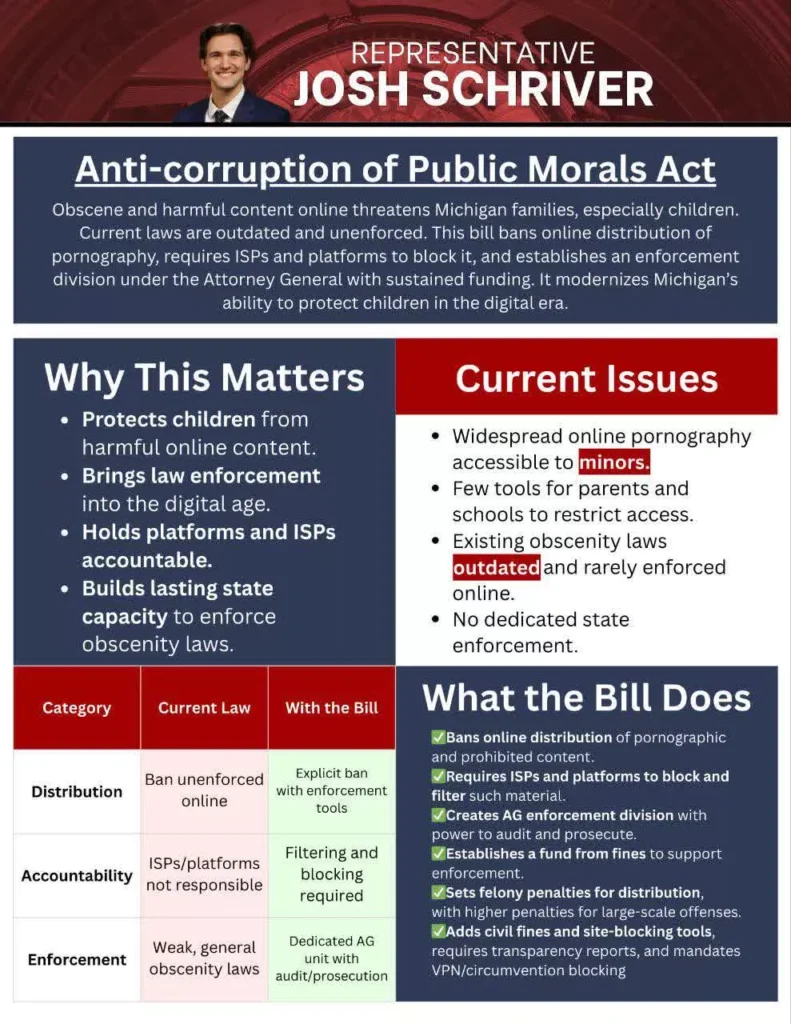
- Full restriction on adult content: The bill aims to block all forms of explicit content online, including videos, images, text, and even certain types of audio.
- Ban on VPNs and similar tools: VPNs, proxy servers, and encrypted tunneling methods — typically used to protect privacy or bypass restrictions — would also be banned.
- Strict penalties for distributors: Anyone caught distributing restricted content could face severe penalties, including being added to government watchlists.
Representative Josh Schriver, the lead sponsor, argues that the measure is designed to “defend children, safeguard communities, and put families first.” Supporters of the bill claim it will protect young people from harmful material, while critics argue it represents overreach and censorship.
Why the VPN Ban Matters
VPNs are widely used for privacy, security, and freedom online. Many businesses rely on VPNs to protect sensitive data, and individuals use them to secure personal information on public Wi-Fi. If passed, Michigan’s bill would make it illegal for residents to use VPNs, effectively removing one of the most common tools for online privacy.
A Wider Trend in Online Restrictions
The Michigan bill is part of a larger global debate about how much governments should regulate online spaces. Other states and countries have introduced age-verification systems or filtering requirements, but Michigan’s proposal goes further by attempting an outright ban — not only on certain content but also on the tools people use to access the internet securely.
What Happens Next?
The bill is still under discussion, and it remains to be seen whether it will gain enough support to become law. Privacy advocates, digital rights groups, and technology experts are expected to strongly oppose the measure, arguing that it could set a dangerous precedent for internet freedom in the U.S.
FAQs
Q1. What is Michigan’s new bill about?
It’s a proposal to block explicit online content and also ban VPNs and other privacy tools in the state.
Q2. Why does the bill target VPNs?
Lawmakers argue that VPNs allow people to bypass online restrictions, but critics say banning them would harm privacy and cybersecurity.
Q3. Who supports the bill?
The proposal was introduced by six Republican representatives, led by Josh Schriver of Oxford, Michigan.
Q4. Could this affect businesses?
Yes. Since many companies use VPNs to protect sensitive data, a statewide ban could create major security risks.
Q5. Is the bill a law yet?
No. It’s still a proposal and must go through the legislative process before becoming law.
About the Author
Anish is the founder of TechBoltX, sharing mobile gaming rewards, guides, and daily updates.