 ByAnish

AI Investments Power U.S. Economic Growth in 2025
Meta, Microsoft, Alphabet, and Amazon’s record-breaking AI infrastructure investments are now a key driver of U.S. GDP growth, outpacing consumer spending in recent quarters.
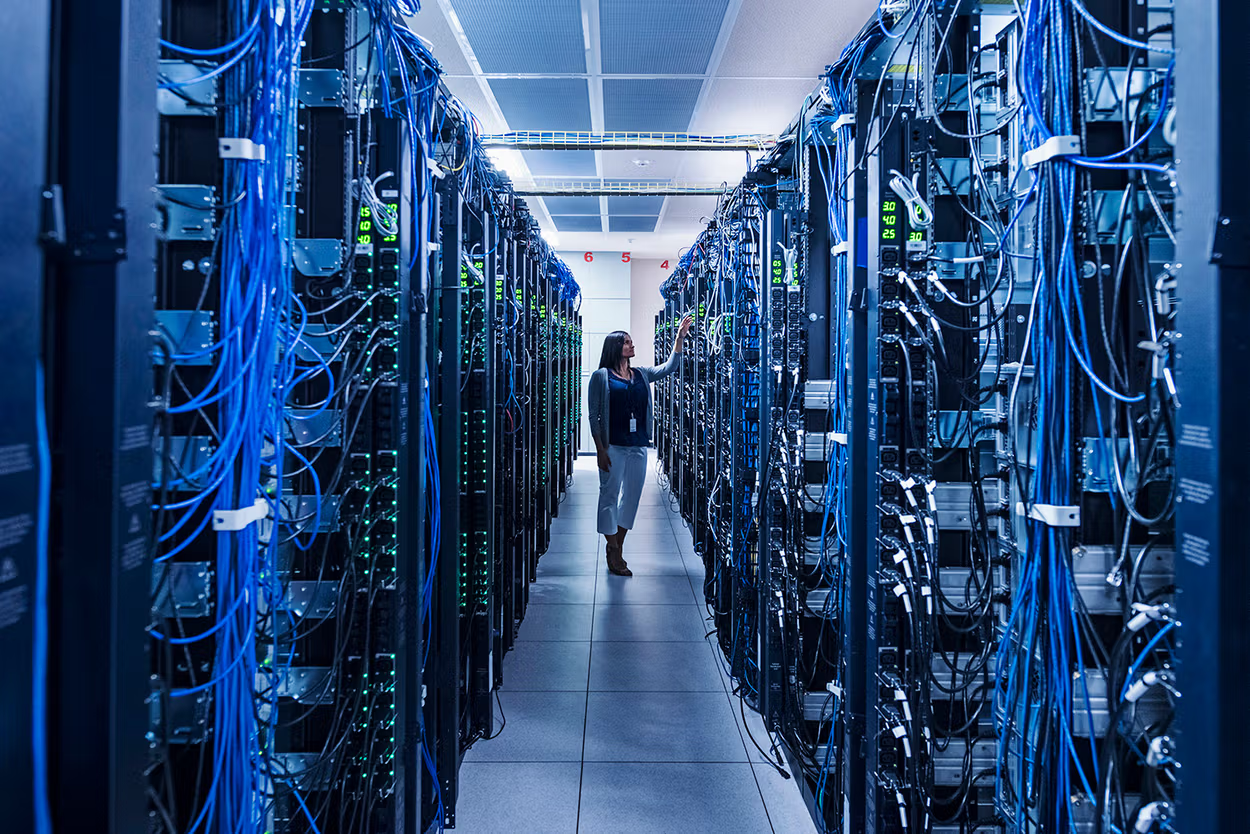
Massive spending on AI data centers and cutting-edge semiconductor technology is keeping the U.S. economy afloat. According to economist Paul Kedrosky, AI-related investments contributed 1.3% of the 3% GDP growth last quarter—making AI a more significant growth engine than traditional consumer spending.
Big Tech’s $320 Billion AI Spending Boom
Industry giants Meta, Alphabet, Microsoft, and Amazon poured $69 billion into AI infrastructure last quarter alone, with projections reaching $320 billion for the year—up sharply from $230 billion in 2024. These investments include high-performance GPUs from Nvidia and AMD, massive data center expansions, and enhanced cloud AI services.
This spending spree has fueled stock market gAIns for AI chipmakers and created new opportunities for utility companies and real estate developers in key tech hubs like Northern Virginia.
A Bigger Impact Than the Dot-Com Era
Kedrosky notes that AI spending now accounts for a larger share of GDP than telecom and internet investments did during the dot-com boom of 2000. The trend suggests that AI has become a critical pillar of economic growth, similar to how railroads and industrial infrastructure powered previous economic eras.
Bubble Concerns on the Horizon?
While Wall Street analysts remain bullish—citing rising demand for AI-powered cloud services—some economists warn of overinflated expectations. If AI productivity gains fail to materialize, the “Great Data Center Buildout” could face the same fate as the dot-com bubble, where investment outpaced real-world adoption.
Additionally, experts caution that the true economic impact of AI spending may be overstated since much of the semiconductor manufacturing occurs overseas, limiting domestic job creation.
The Bottom Line
For now, AI investment is acting as the economy’s performance booster, masking a slowdown in traditional economic drivers. Whether it becomes the backbone of long-term productivity or a short-lived tech bubble remains the trillion-dollar question.