 ByAnish

Google Can Keep Chrome but Must End Exclusive Search Deals
Google Wins Chrome, Loses Exclusive Search Rights
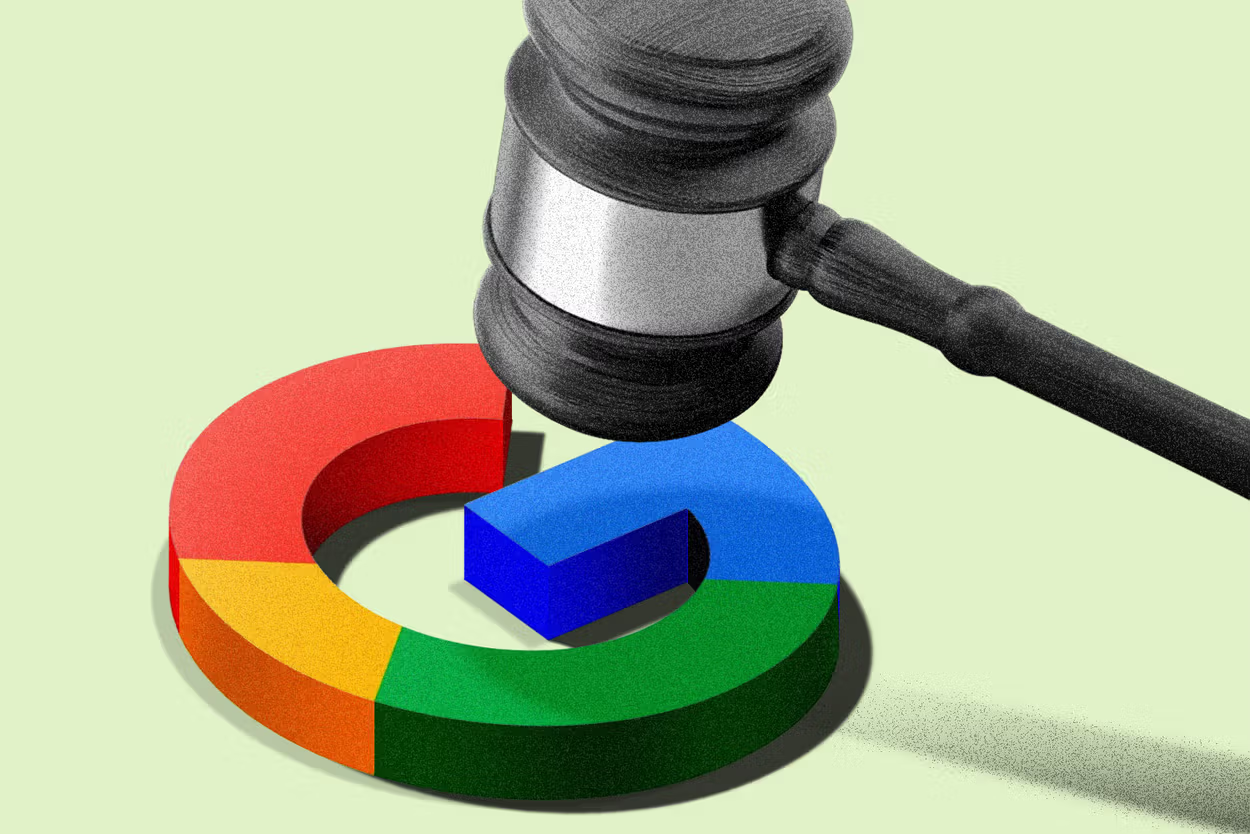
A federal judge has delivered a landmark ruling in the 2020 antitrust case against Google. While the company does not have to sell its Chrome web browser, it cannot engage in exclusive search contracts that limit competition.
US District Judge Amit Mehta ruled that Google must share limited search data and user-interaction data with qualified competitors, but it does not have to disclose its most valuable advertising data.
Background: The 2020 DOJ Antitrust Case
The Department of Justice argued that Google illegally maintained its search dominance by signing contracts with Apple, Mozilla, and Samsung, making Google the default search engine on many devices. Chrome, with 69% global market share, provides Google valuable user data that powers its search algorithms and ad targeting.
The DOJ initially proposed that Google should divest Chrome. However, the court rejected this, stating:
“Plaintiffs overreached in seeking forced divestiture of these key assets, which Google did not use to effect any illegal restraints.”
What the Ruling Means for Google
Google Can:
- Keep Chrome and Android
- Continue paying to have apps pre-loaded on devices
Google Cannot:
- Enter exclusive contracts for Search, Chrome, Google Assistant, or Gemini AI
- Maintain unfair search-related restrictions that block competition
Google must also share search data with rivals to foster competition but can limit access to sensitive ad-related data.
Google’s Response
Lee-Anne Mulholland, VP of Regulatory Affairs, emphasized:
“Divesting Chrome and Android would have gone beyond the case’s focus on search distribution, and would have harmed consumers and our partners.”
Mulholland noted that AI innovation has strengthened competition in the search space despite Google’s dominance.
The Impact on Google’s Core Business
Google continues to dominate:
- Google Search: 373 times larger than ChatGPT (700M weekly users)
- Chrome: World’s most popular browser
- YouTube and Android: Billions of users
The ruling is a relief for Google, as it avoids restructuring its main revenue driver: search and online advertising.
Advertising Transparency Rules
Google also faces new transparency requirements in ad auctions to prevent secret manipulation. However, the ruling does not require giving publishers more control over content used to train AI models like Gemini or feed AI-generated Search Overviews.
Why This Matters
- For Competitors: More access to search data levels the playing field
- For Advertisers: Increased transparency in Google Ads
- For Users: Chrome remains unchanged, but AI Overviews may become more competitive
Key Takeaways
- Chrome stays with Google, but exclusive search deals end
- Data-sharing with qualified competitors is required
- AI innovation keeps competition alive despite Google’s dominance
- Transparency rules aim to curb unfair ad practices
This landmark ruling strikes a balance between preserving consumer choice and preventing monopolistic behavior in online search.