 ByAnish

Apple’s Encryption Victory: U.S. Pressures U.K.
Apple’s Encryption Victory: U.S. Pressures U.K. to Drop iCloud “Back Door” Demand
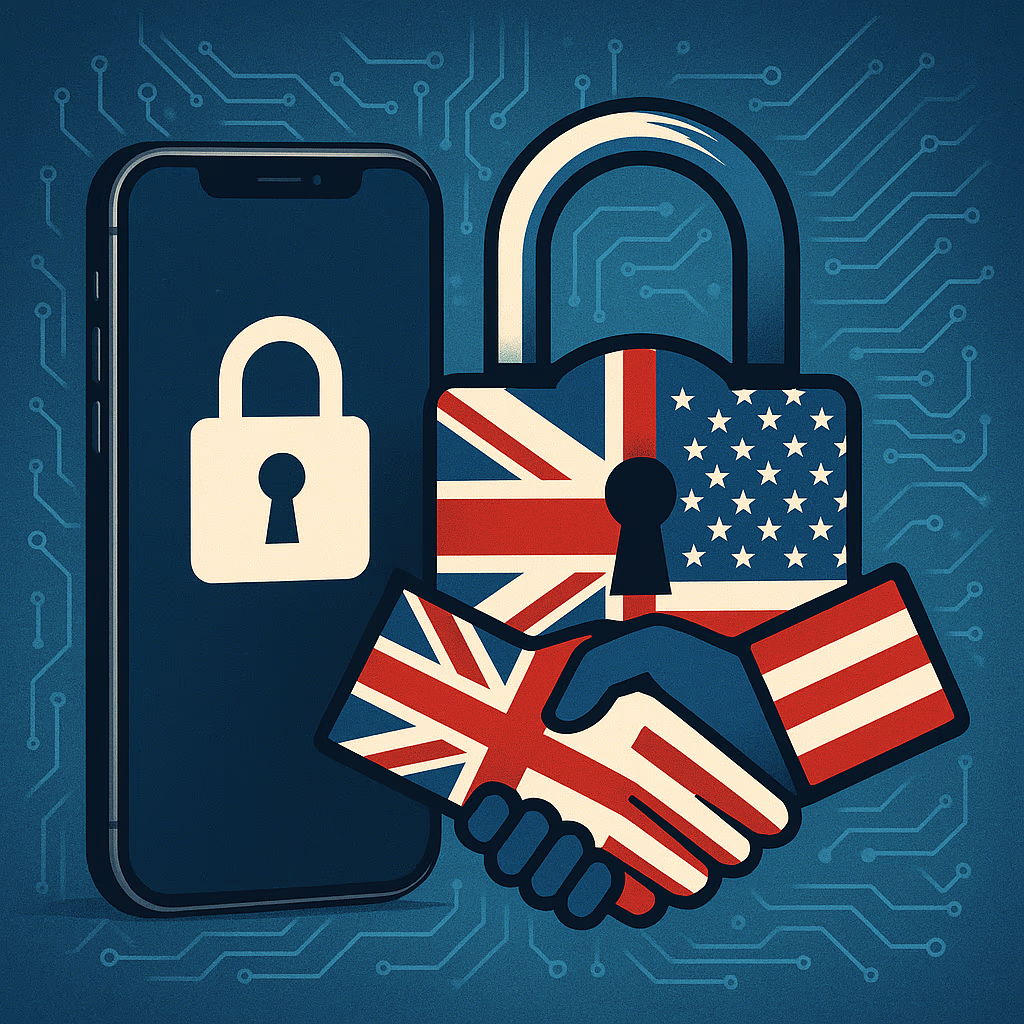
In a landmark win for user privacy, the U.K. government has rescinded its Technical Capability Notice that sought to force Apple to build an encryption “back door” into iCloud. The decision follows intense U.S. diplomatic pressure, reinforcing the importance of end-to-end encryption and setting a major precedent for global digital rights.
???? Background: The “Snooper’s Charter” Dispute
In January 2025, under the Investigatory Powers Act—known as the “Snooper’s Charter”—the U.K. Home Office issued a secret Technical Capability Notice demanding Apple create a hidden access point for iCloud backups.
Apple’s response was swift: it disabled Advanced Data Protection (ADP) in the U.K., sparking outrage among privacy advocates. Critics warned that any back door, no matter how limited, would inevitably be abused by cybercriminals and authoritarian regimes.
???????? U.S. Intervention and Diplomatic Pressure
On August 19, 2025, U.S. Director of National Intelligence Tulsi Gabbard announced via X that the U.K. had agreed to withdraw its back door demand after discussions with the White House and senior officials.
The U.S. framed the issue as one of constitutional rights and national security, ensuring American citizens’ private communications remain shielded from foreign government access.
???? What This Means for Apple and Users
With the U.K. mandate dropped, the implications are far-reaching:
- Restoration of Advanced Data Protection (ADP): Apple can now re-enable its strongest iCloud encryption globally, giving only users access to their private keys.
- No Precedent for Back Doors: This sets a powerful global precedent against governments forcing encryption weaknesses.
- Civil Liberties Upheld: Journalists, activists, and ordinary citizens alike retain stronger protections against surveillance and data breaches.
???? Industry and Advocacy Reactions
The decision drew praise across the tech industry and privacy advocacy groups:
- Meta and WhatsApp hailed the outcome as a victory for secure communications.
- Liberty’s Sam Grant called the U.K.’s earlier demand “reckless and potentially unlawful.”
- The Internet Society warned that mandatory access could have endangered global cybersecurity by creating exploitable vulnerabilities.
⚖️ What’s Next?
While the U.K. has officially withdrawn its demand, Apple’s legal challenge against the Technical Capability Notice will still proceed in the Investigatory Powers Tribunal in early 2026. The case could determine whether similar back door demands remain legal under U.K. law.
Observers will also be watching closely to see whether other tech companies face similar pressure—or whether governments will now rethink their approach to encryption policy.
???? Why This Matters
Apple’s victory is not just about one company. It is a signal moment for the future of encryption worldwide:
- Strong encryption protects everyday users from hackers and data breaches.
- Weakening encryption puts journalists, activists, and vulnerable groups at risk.
- This ruling underscores that privacy and national security are not mutually exclusive—they are interconnected.
By restoring Advanced Data Protection worldwide, Apple has reinforced that uncompromised encryption remains the bedrock of digital trust in 2025 and beyond.