 ByAnish

Web & App Development 2025: Securing the Front End
Web & App Development in 2025: Front-End Trends and Security Must-Knows
In 2025, the world of web and app development continues to evolve at lightning speed — and so do the risks. From next-gen JavaScript frameworks to the increasing demand for app performance and security, developers today face a dual challenge: delivering rich user experiences while maintaining airtight security.
Why Front-End Matters More Than Ever
In a mobile-first, app-heavy world, the front end is no longer just about aesthetics. It’s the first line of trust, performance, and usability. Modern users expect:
- Fast load times
- Mobile responsiveness
- Real-time interactivity
- Secure data handling
Tools like React 19, Vue 4, and SvelteKit are redefining how we build dynamic interfaces. But with that power comes complexity—and new attack surfaces.
Key Trends in Front-End Development (2025)
???? Component-Based Architectures: Reusable, scalable UI components are now the norm. Libraries like React and Vue dominate for their modularity and DX (developer experience).
???? Server Components & Edge Rendering: Front-end dev is now “full-stack.” Technologies like Next.js 14 and Remix use edge rendering to deliver ultra-fast responses globally.
???? WebAssembly (WASM): Enables high-performance apps in the browser, especially for gaming, graphics, and AI-enhanced UIs.
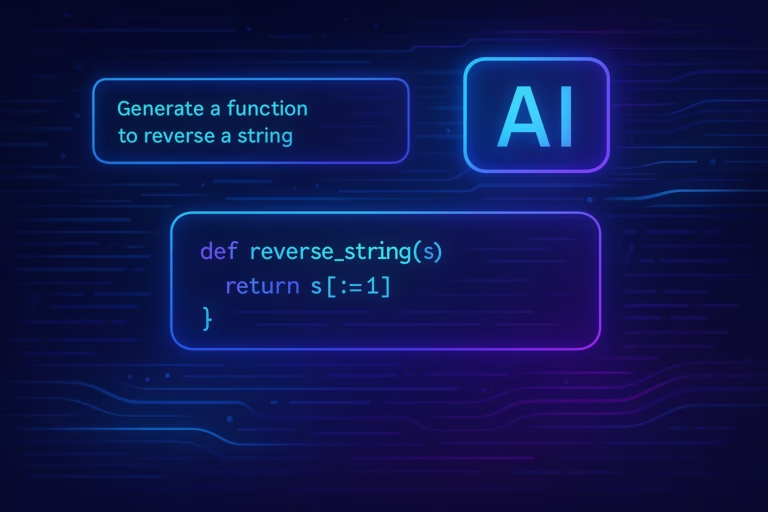
???? AI-Powered Dev Tools: GitHub Copilot, CodeWhisperer, and others help front-end devs write clean, secure code faster with autocomplete, linting, and optimization suggestions.
Security Is the New UX
Front-end code is exposed by default — making it a prime target. In 2025, smart developers are embedding security into every layer of their front-end workflow:
???? Common Threats in 2025:
- DOM-based XSS
- Clickjacking & UI Redressing
- Supply Chain Attacks via npm packages
- Token Theft in SPAs (Single Page Apps)
????️ Best Practices:
- Content Security Policies (CSPs) to restrict script loading.
- Strict CORS configurations to prevent data leaks.
- Token expiration and refresh flows for safe API access.
- Framework security hardening (e.g., React’s strict mode, Svelte’s sanitization).
- SAST/DAST Tools (e.g., Snyk, OWASP ZAP) integrated into CI/CD pipelines.
???? Tip: Always log user actions and anomalies—auditable behavior improves trust and post-attack investigation.
App Performance + Security = User Trust
- Core Web Vitals remain crucial for Google rankings. Optimizing Largest Contentful Paint (LCP) and Cumulative Layout Shift (CLS) ensures smooth, fast interactions.
- Zero Trust Architectures are being adopted even in front-end workflows via fine-grained API access controls and role-based UI rendering.
Conclusion: The 2025 Developer’s Mindset
To thrive in 2025, front-end and app developers need to think beyond code. Performance, security, privacy, and accessibility are now table stakes. Whether you’re building with React, Svelte, or a headless CMS—a secure front end is a successful front end.
???? “Users won’t wait for a slow site, and they won’t trust an insecure one. Front-end developers are now UX designers, security engineers, and performance analysts—often all at once.” – Sophia Ng, Web Security Lead @ Mozilla